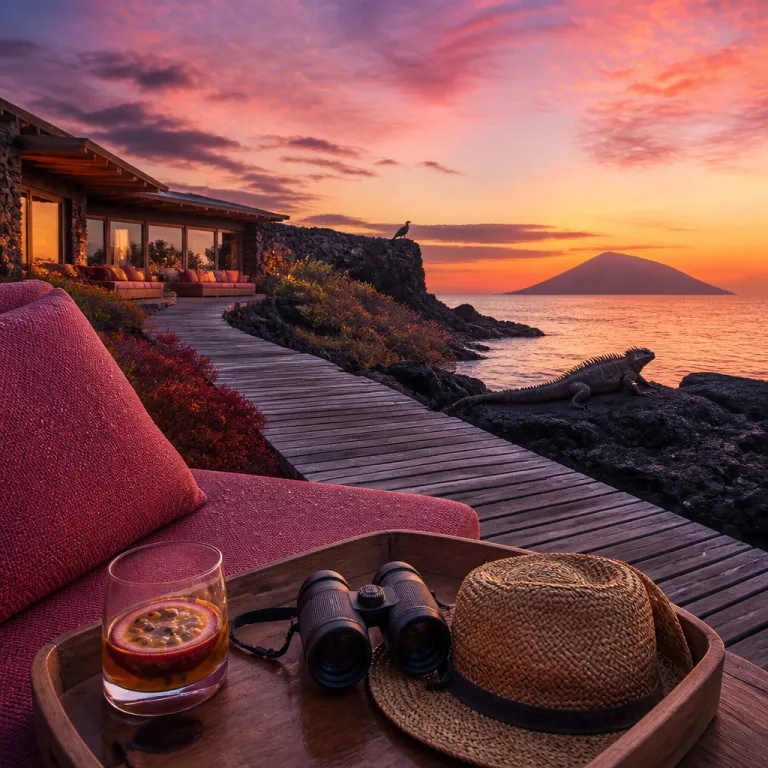
Why Isabela Island is the Galápagos address for refined adventure
Isabela Island offers the most spacious landscapes in the Galápagos, which makes it ideal for travelers seeking privacy and calm. This vast island combines active volcanoes, turquoise sea, and quiet villages, so a luxury stay here will feel both remote and deeply comfortable. With only a small resident population spread across the island, high end hotels can provide attentive service while keeping you close to raw nature.
Formed by six volcanoes, Isabela is the largest island in the archipelago, and its dramatic land shapes frame every premium room view. Many luxury properties sit near Puerto Villamil, where soft sand and gentle water create a serene setting that contrasts with the wild lava fields inland. From your terrace you may watch marine birds cross the sky at daybreak, while at night the sound of the sea, the scent of salt, and the distant glow of town lights remind you how isolated this island Galápagos location truly is.
Travelers comparing Galápagos Islands options often weigh Santa Cruz against Isabela Island for a first trip. Santa Cruz offers more shops and restaurants, but Isabela Island delivers quieter beaches, fewer people, and easier access to marine and land excursions such as Sierra Negra or Los Tuneles. If you value space, wildlife, and a slower rhythm, Isabela will usually feel like the more exclusive choice among the islands, especially when you base yourself in Puerto Villamil luxury hotels.
Choosing the right luxury base in Puerto Villamil
Most premium hotels on Isabela Island cluster around Puerto Villamil, a low rise village stretched along a luminous beach. This compact town allows you to walk from your suite to the sea in minutes, while still reaching the small harbor for any boat tour or private charter. Because the population is limited, even the most elegant properties remain closely integrated with local life on the island.
When you compare luxury stays in Puerto Villamil, focus on three elements; direct beach access, guided nature experiences, and sustainability credentials. Some hotels front the main beach where marine iguanas bask and sea lions rest, while others sit closer to the wetlands where land birds and flamingos feed in shallow water. Ask whether your preferred property partners with Galápagos National Park guides for small group excursions, as this will shape the quality of every day trip and the depth of interpretation you receive.
High end hotels here increasingly support conservation, sometimes contributing to the nearby tortoise breeding center or local marine research. One common guest question is; "Is Isabela Island safe to visit?" and the official answer from park authorities is that visits are considered safe when travelers join guided tours and follow established rules. Choosing a property that works closely with park authorities, the Charles Darwin Foundation, or trusted local operators such as Pahoehoe Galapagos Tours adds reassurance, especially if this is your first stay in the Galápagos Islands; for example, some concierges pre arrange private guides, wetsuit fittings, and timed entries for Los Tuneles before you even land.
Planning your trip; when to book and how to arrive in style
Securing the right room on Isabela Island requires early planning, because luxury inventory is limited and demand for the islands keeps rising. Suites with uninterrupted sea views or direct beach access in Puerto Villamil often sell out months ahead, especially when families plan a long awaited Galápagos trip. If you are tied to school holidays, consult guidance on peak season in the Galápagos and how to secure your stay before fixing your dates.
Most travelers reach Isabela by small aircraft or by fast boat from Santa Cruz Island, usually departing from Puerto Ayora. The flight offers dramatic views over the sea and volcanic land, while the boat crossing lets you feel the open water and may reveal dolphins or sea turtles along the way. Your hotel’s concierge will typically coordinate these legs of the trip, arranging private transfers, luggage handling, and advising which option suits your comfort level.
Once you arrive in Puerto Villamil, a short vehicle ride or even a walk will bring you to most luxury properties. Some hotels include a welcome orientation that explains how to visit Sierra Negra, Los Tuneles, and nearby beaches over the next day or two. This first briefing is the moment to ask about the best things to do for your specific interests, whether you prefer marine wildlife, land hikes, or quiet time by the beach; one recent couple, for instance, swapped a second boat tour for a guided birdwatching walk after this conversation.
Signature island adventures; from Sierra Negra to Los Tuneles
Isabela Island stands apart in the Galápagos for its volcanic drama, and a guided hike on Sierra Negra is often the highlight of a luxury stay. The trail climbs gradually to the rim of one of the world’s largest volcanic calderas, where sweeping views reveal the island’s layered land history. Because the area remains geologically active, park authorities monitor conditions closely and your hotel will only schedule the hike on safe days.
Another essential experience is a Los Tuneles tour, which takes you by boat across shallow water to a labyrinth of lava arches and pools. Here, marine life thrives; you may snorkel above sea turtles, watch blue footed boobies nesting on the rocks, and see marine iguanas slipping into the sea. Many guests consider Los Tuneles and the nearby Tintoreras islets to be among the best things to do anywhere in the Galápagos Islands, especially when the water is clear enough to see rays gliding silently below.
Luxury hotels often arrange private or semi private departures for Los Tuneles tours, which reduces crowding and allows more flexible timing. A well planned day might combine a morning visit to Sierra Negra with an afternoon snorkel, or alternate marine excursions with gentler land walks to avoid fatigue. If you are staying several days on the island, ask your concierge to balance boat days, hiking days, and relaxed beach time so the trip feels indulgent rather than rushed.
Marine encounters; Concha de Perla, Tintoreras, and beyond
For travelers who love the water, Isabela Island offers some of the most intimate marine experiences in the Galápagos. Concha de Perla, a sheltered natural pool near the port, lets you slip quietly into clear water where sea lions, sea turtles, and colorful fish often pass within meters. Because this site is close to Puerto Villamil, many luxury guests visit more than once during their stay, timing swims for the calmest part of the day.
Nearby Tintoreras is a cluster of small islands reached by a short boat ride, where channels of turquoise sea host white tipped reef sharks and resting marine iguanas. On the surrounding rocks, blue footed boobies and other marine birds share space with land birds that have adapted to the harsh lava environment. A well briefed guide will explain how these species evolved on each island Galápagos habitat, turning a simple tour into a deeper understanding of the archipelago.
If you are considering more advanced snorkeling or diving, your hotel can point you to specialist operators and curated resources such as this guide to Galápagos diving from your first snorkel to stronger currents. Even if you only swim at Concha de Perla or during a Los Tuneles tour, you will encounter marine iguanas, playful sea lions, and often sea turtles at close range. These moments in the water become the emotional core of many trips, especially for guests who usually associate luxury with urban hotels rather than wild islands.
Gentle days on land; beaches, wildlife centers, and historic sites
Not every day on Isabela Island needs to involve a long boat ride or a demanding hike. Many luxury travelers appreciate slower mornings on the main beach of Puerto Villamil, where soft sand, calm sea, and the occasional finch or heron create a peaceful frame for coffee. Walking a few hundred meters, you may see marine iguanas crossing the path, sea lions sleeping in the shade, and land birds feeding in the wetlands behind the shore.
A short distance from town, the tortoise breeding center offers a structured way to understand conservation work on the island. Here, giant tortoises from different volcanoes are raised in protected enclosures before returning to the wild, and the facility explains how tortoise breeding supports the long term health of Galápagos ecosystems. Families often rate this visit among the best things to do on a rest day, because it combines education with gentle walking on flat land.
History minded guests can walk or cycle to the Wall of Tears, a sombre stone structure built by prisoners in the mid twentieth century on the outskirts of town. The route passes lagoons where birds gather and low hills with views back toward Puerto Villamil, giving a sense of how isolated this island once felt. One recent guest described pausing at a lookout, hearing only wind and distant waves, and realizing how different this pace is from life on Santa Cruz or in mainland cities.
Key figures for planning a refined stay on Isabela Island
- Isabela Island covers about 4,588 km², making it by far the largest island in the Galápagos archipelago according to the Galápagos Conservancy and Galápagos National Park data, which explains why landscapes feel more open and less crowded than on Santa Cruz.
- The highest elevation on Isabela reaches approximately 1,707 m at the volcanoes’ summits, a figure reported by Galápagos National Park, so day trips to Sierra Negra can involve cooler temperatures and require layered clothing compared with the warm beach at Puerto Villamil.
- The resident population of Puerto Villamil and surrounding settlements is around 1,800 people, based on recent estimates from Ecuador’s national statistics institute (INEC), a small community that limits urban development and helps maintain a tranquil atmosphere for luxury hotels.
- Isabela’s six volcanoes, five of them still active according to Galápagos National Park and the Charles Darwin Foundation, make it one of the most geologically dynamic islands on Earth, which is why these institutions continue intensive monitoring and research.
- Recent eruptions on Isabela’s volcanoes in the early twenty first century, documented by Galápagos National Park, have reinforced strict safety protocols for guided hikes, so visitors rely on certified guides and hotel concierges to schedule Sierra Negra excursions only on approved days.
FAQ; luxury travel and hotel booking on Isabela Island
How can I get to Isabela Island from other Galápagos Islands ?
You can reach Isabela Island either by small aircraft or by fast boat from other Galápagos Islands, most commonly from Santa Cruz. Flights are quicker and smoother, while boats are usually more economical but depend on sea conditions. Your hotel or booking platform should coordinate schedules so your trip connects smoothly with your international arrival in Ecuador.
Is Isabela Island safe for luxury travelers and families ?
Isabela Island is considered safe when visitors follow Galápagos National Park rules and travel with licensed guides. Park guidance notes that visits are appropriate for families and independent travelers who respect regulations and stay on marked trails. Luxury hotels add another layer of security through vetted partners, structured day tours, and clear briefings before each excursion.
What wildlife is unique to Isabela compared with other islands ?
Isabela hosts emblematic Galápagos species such as marine iguanas, Galápagos penguins, and flightless cormorants, which are easier to see here than on many other islands. Around Los Tuneles and Tintoreras, you may also encounter sea turtles, sea lions, and blue footed boobies during the same tour. Inland, the tortoise breeding center showcases several distinct giant tortoise lineages linked to different volcanoes on the island.
How many days should I stay on Isabela Island for a premium experience ?
A refined itinerary usually includes at least three full days on Isabela Island, which allows time for Sierra Negra, a Los Tuneles tour, and relaxed hours on the beach. Guests who stay four to five days can add Tintoreras, Concha de Perla, the Wall of Tears, and extra marine excursions without rushing. Shorter visits are possible, but they limit how deeply you can enjoy both land and sea activities.
Do I need to book tours in advance or can my hotel arrange them on arrival ?
For peak periods, it is wise to reserve key excursions such as Los Tuneles tours and Sierra Negra hikes before your trip, especially if you want private departures. Many luxury hotels hold limited spaces with trusted operators, but last minute availability is never guaranteed on a small island. A good strategy is to secure essential tours ahead of time, then let your concierge fine tune the remaining days once you arrive.