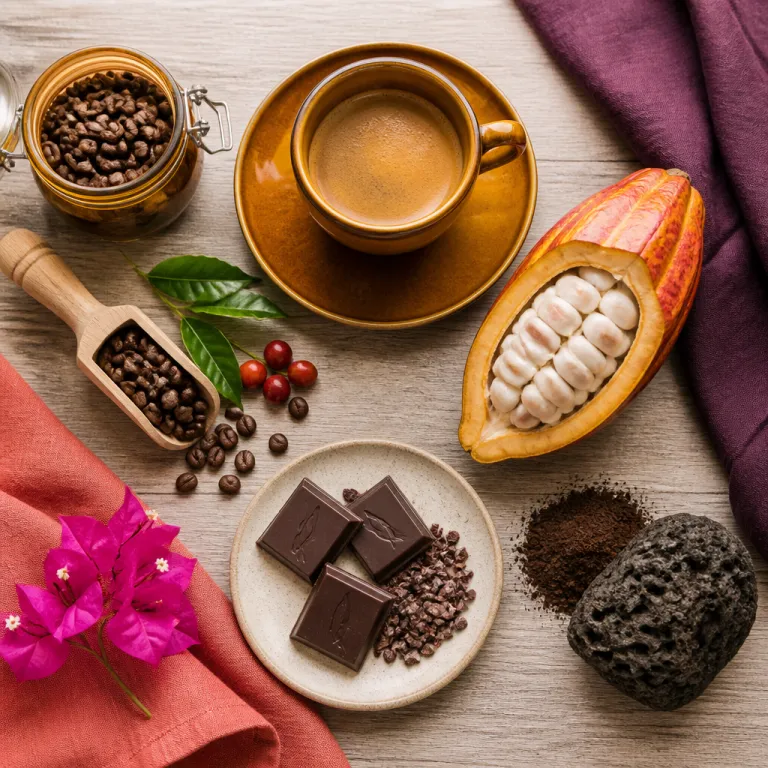
The quiet rise of Galápagos coffee and chocolate on volcanic soil
Galápagos coffee has a surprisingly long story, beginning when the first plants reached the archipelago in the nineteenth century and settled into the misty highlands of each Galápagos island. On Santa Cruz and San Cristóbal, coffee cultivation now shares the same volcanic slopes as giant tortoise reserves, creating a rare agricultural landscape where farms, forests and wildlife still overlap in a delicate balance. For travelers planning several days on land before or after a Galápagos cruise, this emerging coffee experience is becoming as compelling as any snorkel with sea lions.
The best coffee farm visits sit between 400 and 600 meters above sea level, where cool nights and mineral rich lava soils slow the ripening of coffee beans and concentrate flavor. On Santa Cruz, a short taxi ride of around 20–30 minutes from Puerto Ayora takes you up into the highlands, where small family farms such as Finca El Trapiche or Finca Ecológica offer a coffee tour that often begins under Scalesia trees and ends with a cup of freshly roasted Galápagos coffee on a shaded veranda. These farms tend to be small operations rather than industrial production sites, so every visit moment feels personal, with growers explaining how they prune, compost and hand pick cherries across the islands.
For couples used to single origin menus in mainland Ecuador or Quito cafés, tasting Galápagos coffee where it is grown adds a new layer of context and romance. You stand on dark volcanic earth, hear finches in the branches and then sip a chocolate coffee blend that reflects both the terroir and the slow rhythm of island life. This is not a rushed tour squeezed between back to back excursions; it is a sensory experience that rewards travelers who extend their stay on a Galápagos island and lean into the archipelago’s quieter, more agricultural side.
From farm to hotel cup: how to plan a galapagos coffee chocolate tasting
Planning a Galápagos coffee and chocolate tasting around your hotel stay starts with choosing the right base on the Galápagos Islands. If you stay in Puerto Ayora on Santa Cruz, you can board a taxi or join small guided tours that link a coffee farm, a cacao plot and a highland tortoise reserve in a single day. Many luxury properties now coordinate these tours directly, so your only task is to confirm which farms you want to visit and how many days you wish to dedicate to this side of the islands.
A typical coffee tour in the Santa Cruz highlands begins with a walk through mixed crops, where coffee cultivation shares space with bananas, citrus and sometimes small patches of cacao. You learn how shade trees protect coffee beans, how organic compost reduces dependence on imports from mainland Ecuador and why volcanic soils give Galápagos coffee its gentle acidity and soft body. Some farms still process beans with traditional methods, using simple pulpers and sun drying patios, while others have upgraded to more controlled production techniques that appeal to quality focused travelers.
Couples arriving by Galápagos cruise can often add a land based coffee experience either before embarkation or after disembarkation, especially if their itinerary passes through Baltra and connects easily to Santa Cruz. Several expedition operators now highlight gourmet expedition dining, and resources such as the guide on how luxury yachts turned the Pacific into a tasting menu help you understand how shipboard chefs integrate local beans and cacao into their menus. Whether you arrive from Quito or another part of Ecuador, planning at least one full day around a combined coffee and chocolate experience ensures that your time on a Galápagos island includes both marine and culinary evolution.
Chocolate from bean to bar in the Galápagos highlands
Chocolate in the Galápagos Islands begins its story on the mainland, where Ecuadorian cacao is among the most prized in the world, then continues on small island farms that experiment with fermentation and drying. According to figures published by the Ecuadorian Ministry of Agriculture and Livestock (MAG) and summarized in its online statistical bulletins, national cacao production reached roughly 365,000 metric tons in recent years, underscoring why Ecuador is considered a powerhouse origin for fine flavor beans that also feed Galápagos chocolate projects. On Santa Cruz, a handful of farms near Puerto Ayora now grow cacao alongside coffee, turning part of their harvest into small batch bars that showcase the archipelago’s climate and volcanic soils. These chocolate experience visits often pair a walk through cacao trees with tastings of both pure chocolate and chocolate coffee combinations, giving travelers a nuanced sense of how flavors shift from bean to bar.
One of the most interesting initiatives for luxury travelers is the Galápagos Chocolate Experience hosted at Galápagos Safari Camp in the highlands above Puerto Ayora. During this guided program, guests explore cacao plantations, handle fresh cacao pods and then sit down for a structured tasting led in partnership with To’ak Chocolate, which produces some of Ecuador’s most refined single origin bars; the collaboration is described by both partners in their official materials. The organizers describe it clearly for guests who ask what to expect: “What is the Galápagos Chocolate Experience?” “A guided tour and tasting session at Galápagos Safari Camp.” “Who produces the Galápagos chocolate?” “To’ak Chocolate crafts the chocolate from local cacao.” “How long is the tour?” “Approximately 1.5 hours.”
For couples browsing a luxury and premium hotel booking website, this kind of curated chocolate experience can be the deciding factor between two properties. A camp or lodge that integrates cacao education, a bean bar style tasting and thoughtful pairings with local coffee beans signals a deeper commitment to place. When you see a property featured in a guide to gourmet dining experiences on Galápagos hotel booking platforms, look closely at how they talk about cacao, coffee chocolate desserts and their relationships with local farms, because that language often reflects real, on the ground partnerships.
Where luxury hotels turn local beans into elevated rituals
High end hotels across the Galápagos Islands are quietly turning Galápagos coffee and chocolate tastings into a signature ritual rather than a simple amenity. On Santa Cruz, several properties in and around Puerto Ayora now serve locally roasted Galápagos coffee at breakfast, offer chocolate coffee truffles at turndown and design spa treatments that use cacao based scrubs sourced from nearby farms. The most thoughtful teams treat each coffee experience as a narrative, explaining which coffee farm produced the beans, how many days they were fermented and why the roast level suits the island’s humid climate.
On San Cristóbal, where the pace is slower and the town smaller, a few upscale lodges have begun partnering with local producers to offer private coffee tour excursions that end with a tasting back at the hotel bar. Guests might spend the morning walking through coffee cultivation plots in the highlands, then return to a terrace overlooking the harbor to compare a single origin pour over with a chocolate coffee cocktail. This kind of loop between farm, tour and hotel cup creates a sense of continuity that many couples seek when they book a romantic stay on a Galápagos island.
Some properties go further by integrating coffee and cacao into multi course tasting menus that sit comfortably alongside the archipelago’s seafood focused identity, where spiny lobster and line caught fish still dominate. If you read the in depth piece on why the naturalist guide is the real Galápagos luxury, you will notice a similar pattern: the most memorable experiences are those that connect you to place through people and stories. A chef who can talk about Charles Darwin, local farms, cacao production and the fishermen who supply the kitchen brings the same depth of context to your plate and your cup.
Designing a coffee and chocolate focused itinerary around your cruise
Many travelers still approach the Galápagos Islands primarily through a Galápagos cruise, but the smartest itineraries now weave in land based days dedicated to coffee and chocolate. One strategy is to arrive in Ecuador, spend a night in Quito to adjust, then fly to Baltra and transfer directly to Santa Cruz for two nights in the highlands before boarding your ship. Those extra days give you time for a coffee tour, a cacao walk and a relaxed Galápagos coffee and chocolate tasting at your lodge, without the pressure of embarkation schedules.
If your Galápagos cruise begins or ends on San Cristóbal, you can mirror this approach by adding a night or two in town and arranging visits to nearby farms that focus on coffee cultivation and small scale cacao production. Some expedition companies now coordinate these pre and post cruise tours, bundling transfers, farm visits and hotel stays into a seamless package that still leaves room for independent exploration. Couples who value food as much as wildlife often report that these quieter, agricultural days on a Galápagos island become the emotional anchor of the trip.
For those who prefer to remain based on land and skip a cruise entirely, it is easy to design a loop between Santa Cruz and San Cristóbal that balances marine excursions with coffee experience outings. You might spend three days in Puerto Ayora, alternating between snorkeling tours and highland visits, then fly to San Cristóbal for a final stretch focused on beaches, light hikes and another round of coffee and chocolate tastings. In every case, the key is to treat coffee beans, cacao pods and local farms as core parts of the Galápagos narrative, not as optional add ons.
Sustainability, local livelihoods and why your hotel choice matters
Choosing a hotel or camp that takes Galápagos coffee and chocolate seriously is not only a matter of flavor; it is a decision that shapes how money circulates on the islands. When a property buys directly from a coffee farm in the Santa Cruz highlands or from cacao growers near Puerto Ayora, it reduces dependence on shipments from mainland Ecuador and supports families who have chosen agriculture over more extractive activities. This kind of local sourcing also shortens supply chains, which matters in a fragile archipelago where every cargo boat and every crate has an environmental cost.
Projects like the Galápagos Chocolate Experience at Galápagos Safari Camp, developed with To’ak Chocolate and documented in their joint communications, show how thoughtful partnerships can elevate both guest enjoyment and producer visibility. Guests learn about cacao production in Ecuador, understand how many metric tons the country exports and then see how a tiny fraction of that volume becomes a single origin bar tied specifically to the Galápagos. When hotels communicate these details clearly on their booking pages, they help travelers understand that a chocolate experience is not a gimmick but a direct link to local livelihoods.
For couples comparing options on a luxury and premium hotel booking website, it is worth reading beyond room categories and pool photos. Look for mentions of Galápagos coffee served at breakfast, references to visits to coffee farms, notes about chocolate coffee pairings in the bar and any detail about relationships with farms on each Galápagos island. The more a property can speak concretely about its coffee cultivation partners, its cacao sources and its commitment to local production, the more confident you can feel that your stay supports the long term resilience of the islands.
How to read hotel listings through a coffee and chocolate lens
When you scroll through hotel listings for the Galápagos Islands, train your eye to spot the subtle signals that indicate a serious approach to Galápagos coffee and chocolate tastings. A property that simply lists “coffee and tea in room” is offering a basic amenity, while one that names a specific coffee farm, mentions single origin beans or highlights a guided coffee experience is telling you that flavor and provenance matter. The same applies to chocolate; a casual dessert menu is one thing, but a structured chocolate experience with pairings and explanations suggests a deeper culinary ambition.
Pay attention to how hotels describe their excursions and add on tours, especially any reference to highland visits on Santa Cruz or San Cristóbal. If a listing mentions a coffee tour, ask whether it includes time on an actual farm, a chance to see coffee beans being processed and an opportunity to taste both Galápagos coffee and chocolate coffee drinks on site. Some properties also offer board options that integrate farm visits into half day or full day packages, which can be ideal for couples who prefer curated experiences over self navigation.
Finally, consider how a hotel’s coffee and chocolate narrative fits into the broader story of your trip, from Quito to the islands and back to mainland Ecuador. A stay that begins with a tasting flight of Ecuadorian single origin bars in the capital, continues with a bean bar session in the Santa Cruz highlands and ends with a quiet cup on your balcony as marine iguanas warm themselves on black lava feels coherent and intentional. In a place where Charles Darwin once walked and where evolution still plays out in real time, aligning your choices with local farms, careful production and thoughtful Galápagos coffee and chocolate tastings is a small but meaningful way to travel with both pleasure and purpose.
Key figures on Galápagos coffee and chocolate
- Cacao production in Ecuador reached about 365,000 metric tons according to data released by the Ecuadorian Ministry of Agriculture and Livestock (MAG), underscoring why the country is a powerhouse for the cacao that feeds both mainland and Galápagos chocolate projects.
- The Galápagos Chocolate Experience at Galápagos Safari Camp typically runs for about 1.5 hours, which makes it easy to integrate into an afternoon of highland activities without sacrificing other excursions.
- Most Galápagos coffee farms operate between roughly 400 and 600 meters above sea level, a band of altitude that balances cool nights with warm days to create the smooth, low acidity profile many travelers notice in their hotel cup.
- Single origin chocolate bars produced with Ecuadorian cacao have seen rising global demand in recent years, a trend that supports the growth of small bean to bar operations connected to the Galápagos Islands.
Frequently asked questions about Galápagos coffee and chocolate experiences
What is the Galápagos Chocolate Experience and where does it take place ?
The Galápagos Chocolate Experience is a guided plantation walk and tasting hosted at Galápagos Safari Camp in the highlands of Santa Cruz, near Puerto Ayora. Guests explore cacao trees, learn about cultivation and then sample chocolates crafted in partnership with To’ak Chocolate, a collaboration confirmed by both brands. The format suits couples who want an intimate, educational session rather than a large group tour.
Can I visit coffee farms easily from my hotel in Puerto Ayora ?
Yes, several coffee farms in the Santa Cruz highlands are accessible by taxi or as part of organized tours arranged through hotels in Puerto Ayora. Travel times are usually under an hour each way, and a round trip taxi plus farm entrance often falls in the range of a modest half day excursion, leaving plenty of time for walking the fields, seeing basic production steps and enjoying a Galápagos coffee tasting. Many properties can bundle these visits with stops at lava tunnels or tortoise reserves for a full day outing.
How long should I plan for a coffee and chocolate focused day ?
A well paced Galápagos coffee and chocolate tasting itinerary typically takes a full day, especially if you combine a coffee tour, a cacao walk and a relaxed lunch at a highland lodge. Expect to spend several hours on the farms themselves, with additional time for transfers from coastal towns like Puerto Ayora or San Cristóbal’s main port. Couples who prefer slower travel often add a second day to revisit a favorite farm or book a more in depth chocolate experience.
Is Galápagos coffee different from coffee grown on mainland Ecuador ?
Galápagos coffee shares some characteristics with beans from mainland Ecuador but develops a distinct profile due to volcanic soils, ocean moderated temperatures and small scale cultivation. Many tasters describe it as smooth, with gentle acidity and subtle chocolate or nut notes that pair well with local desserts. Experiencing it on a Galápagos island, often just meters from where the plants grow, adds a sense of place that you cannot replicate elsewhere.
Do luxury cruises include coffee and chocolate experiences, or should I stay on land ?
Some Galápagos cruise operators now feature Ecuadorian single origin coffees and chocolates on board, especially on higher end ships with strong culinary programs. However, the most immersive coffee experience and chocolate experience usually happen on land, where you can walk through farms, meet growers and see production up close. For that reason, many travelers pair a cruise with one or two extra days on Santa Cruz or San Cristóbal dedicated to farm visits and tastings.