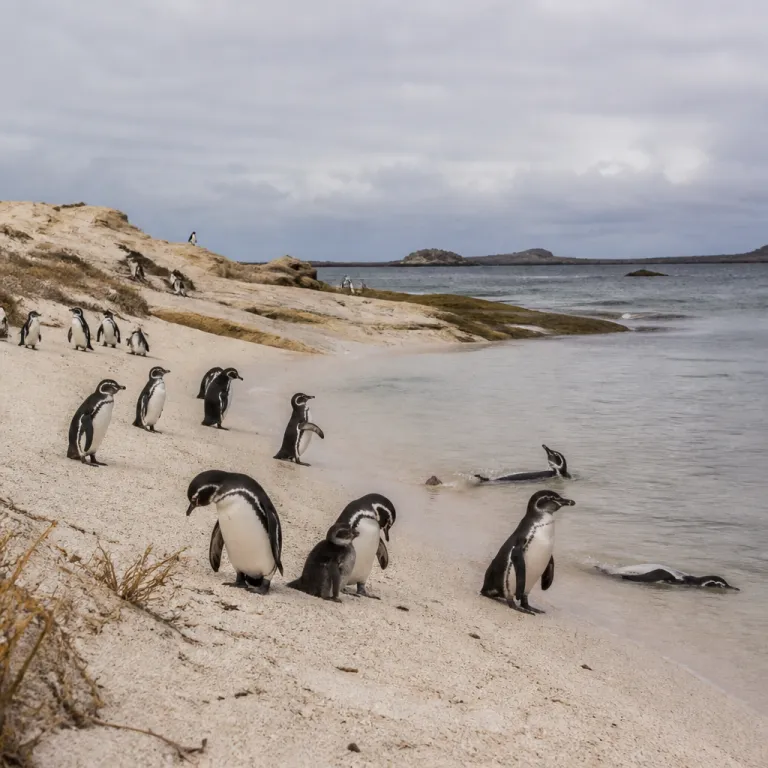
Galápagos penguin where to see them in peak dry season
Families planning a luxury stay in the Galápagos Islands during the dry season often ask a simple question; galapagos penguin where to see them when they are most active. The answer lies in a narrow band of cold water created where the Humboldt Current collides with the equator, forming a marine oasis that allows the only penguin species north of the equator to live and breed here. This rare penguin species has adapted to tropical sunlight by panting to cool down, seeking shade among lava rocks, and slipping into the sea whenever the heat builds.
To understand why galapagos penguins thrive here, you need to picture the western islands as a refrigerated corner of South America’s tropics, where nutrient rich upwellings turn the water into a silver cloud of anchovies and sardines. During the dry season from June to December, this cold water system intensifies around Isabela and Fernandina, and the penguins live at full pace; they court, nest in lava crevices, and hunt in tight flocks that look like small torpedoes. When you read about wildlife galapagos highlights for families, this is the moment naturalist guides quietly circle on their calendars as the best time for close encounters.
On a map of the Galápagos Islands, trace the western rim of Isabela Island and the neighbouring Fernandina Island, often referred to together as isabela fernandina by guides planning marine itineraries. These are the core sites where galapagos penguins and other species galapagos such as marine iguanas and flightless cormorants cluster along the shore. Luxury vessels with strong expedition programs will time their calls here so that children can watch penguins galapagos populations porpoise through the water while sea lions sleep on black rock ledges.
Best islands and sites for seeing penguins with children
When you refine your galapagos penguin where to see shortlist, three names will keep returning in every serious wildlife briefing; Bartolomé Island, the western coast of Isabela, and wild Fernandina. Bartolomé offers the iconic postcard view, with the dark tooth of pinnacle rock rising from turquoise water while small galapagos penguins dry their wings on the lava ledges at its base. For families staying on a luxury yacht or a high end hotel with strong day trip partners, this island is often the first point where children realise that penguins live at the equator.
Western Isabela Island is different; here the experience is less about the single photograph and more about immersion in marine life along long, low shorelines. In calm conditions, naturalist guides may allow confident swimmers to slip into the sea from the panga and snorkel while penguins live out their hunting routines, weaving between marine iguanas and young sea lions in the same cold water column. Sites such as Elizabeth Bay and Tagus Cove on Isabela, and the sheltered inlets of Fernandina, rank among the best marine wildlife galapagos arenas for families who want movement, not just a distant silhouette.
Some itineraries also include Chinese Hat islet, a small volcanic cone where penguins galapagos pairs sometimes rest on the rocks close to the landing site, giving younger children an easier land based view. Here you may watch a single penguin species sharing the same narrow bay with green sea turtles, sea lions, and the dark shapes of flightless cormorants drying their stubby wings. If you are booking during peak demand, read this guide on how to navigate Galápagos cruise bookings so that your chosen hotel or yacht actually reaches these key sites.
How to see Galápagos penguins from luxury bases and family yachts
Choosing the right base is as important as asking galapagos penguin where to see them, because not every luxury property has easy access to the western islands. High end hotels on Santa Cruz or Isabela Island can pair comfortable suites and pools with curated day trips that reach Bartolomé, Chinese Hat, or Elizabeth Bay, while expedition yachts sleep close to the wildlife and move overnight between sites. For premium family travellers, the sweet spot is often a small ship with fewer cabins, where children can get to the panga quickly when a guide spots penguins galapagos hunting beside the hull.
There are three main ways to watch galapagos penguins in action, and each suits a different comfort level and age group. Shoreline observation from marked trails in the national park works well for younger children, who can stand at a safe point while a guide explains how this penguin species shares the rocks with marine iguanas and sea lions. Panga rides along the coast bring you close to the waterline, letting you read the basalt ledges for the small black and white shapes of penguins live among flightless cormorants and other species galapagos icons.
For confident swimmers, snorkeling is the most vivid option, especially in the cold water bays of isabela fernandina where the marine food chain is dense. Here galapagos penguins and galapagos penguins plural may streak past your mask, turning sharply to chase fish while sea lions loop overhead and marine iguanas graze quietly on algae. To understand how these marine encounters fit into the wider ecosystem, and why currents matter for both penguins and manta rays, read this analysis of new research on oceanic manta rays in the Galápagos before you finalise your itinerary.
Conservation, climate and choosing responsible luxury stays
Any honest guide to galapagos penguin where to see experiences in dry season must also address fragility, because this is one of the rarest penguin species on earth. Scientific estimates from the IUCN Red List and Galápagos National Park monitoring reports place the population at roughly two thousand individuals across the entire archipelago, and El Niño events can sharply reduce numbers by warming the sea and stripping away the fish that penguins live on. As one conservation briefing from the IUCN and Galápagos National Park Directorate puts it without embellishment; "Population decline due to climate change."
Luxury travellers have a role here, and it begins with the choice of hotel or yacht in the Galápagos Islands and the way each operator treats the national park rules. Look for properties that work with qualified naturalist guides, limit group sizes on pangas, and time visits to sensitive sites such as Elizabeth Bay, Tagus Cove, and pinnacle rock to avoid crowding small colonies of galapagos penguin and galapagos penguins. When you read sustainability sections on hotel websites, check whether they mention support for wildlife galapagos monitoring, respect for marine protected zones, and staff training on how to manage encounters with sea lions, marine iguanas, and other species galapagos icons.
Families who want their children to see penguins galapagos thriving in future seasons should also think about the wider journey through South America and mainland Ecuador. Pairing a stay in Quito or the Andes with a carefully chosen cruise or island lodge can spread your trip’s impact while still giving you access to the best marine sites, and this curated overview of refined places of interest in Ecuador is a useful starting point. In practical terms, families should book with licensed Galápagos National Park operators, respect daily visitor limits at landing sites, and follow guide instructions on distances from wildlife so that the most meaningful luxury remains the moment when a small galapagos penguin surfaces beside your child in clear water and then vanishes into the blue as if the island itself had exhaled.
FAQ
Why are Galápagos penguins unique among penguin species ?
Galápagos penguins are unique because they are the only penguin species living north of the equator, entirely endemic to the galapagos islands. A combination of the cold Humboldt and Cromwell Currents creates a marine climate cool enough for this penguin to live in the tropics. This makes every sighting near Isabela, Fernandina, Bartolomé, or Chinese Hat a genuinely rare wildlife experience for families.
When is the best time to see Galápagos penguins in the islands ?
The best time to see galapagos penguins is during the dry season from June to December, when cooler water brings abundant fish to the western islands. During this period, penguins live at higher activity levels, breeding, nesting, and foraging close to shore on Isabela Island and Fernandina. Families visiting then will usually have more chances to watch penguins galapagos individuals both on land and in the sea.
Where exactly can families see Galápagos penguins in the national park ?
Key sites for viewing galapagos penguin colonies include the western coast of Isabela Island, Fernandina’s rugged shoreline, Bartolomé’s pinnacle rock area, Elizabeth Bay, Tagus Cove, and sometimes Chinese Hat. These locations sit within the Galápagos National Park, so access is only possible with licensed guides and approved vessels. Luxury yachts and high end hotels that partner with strong expedition teams will prioritise these points on family friendly itineraries.
How do Galápagos penguins stay cool in such a warm climate ?
Galápagos penguins use several behavioural adaptations to manage heat in the islands’ tropical sun. They pant to cool down, seek shade among lava rocks, and spend long periods in cold water currents that flow around isabela fernandina. Many nests sit in small crevices or caves, which helps protect eggs and chicks from direct sunlight while the adults forage at sea.
Is it possible to snorkel with Galápagos penguins safely with children ?
Snorkeling with galapagos penguins is possible in calm conditions at sheltered marine sites such as Elizabeth Bay, Tagus Cove, and areas near Fernandina, always under guide supervision. For families, guides will assess currents, visibility, and each child’s confidence in the water before allowing entry from the panga. Often, even if only adults snorkel, children can still watch penguins live and hunt from the boat while sea lions and marine iguanas move along the shore.