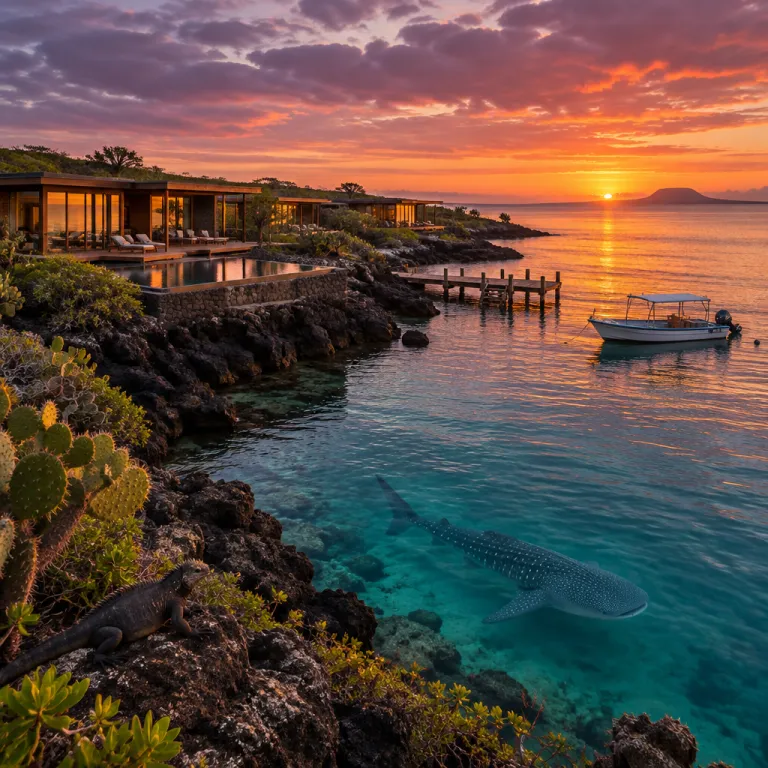
Luxury stays woven into the galapagos whale shark ecosystem
Choosing a luxury hotel in the Galapagos Islands is also choosing how closely you wish to connect with the Galapagos whale shark ecosystem. High-end properties on Santa Cruz Island and San Cristóbal Island now design guest experiences around the seasonal presence of whale sharks and other pelagic shark species in the surrounding marine reserve. This means your stay can be timed precisely to when whale sharks, hammerhead sharks and Galapagos shark populations gather near Darwin Island and the legendary Darwin Arch.
From a hospitality perspective, the most refined hotels understand that every whale shark encounter begins long before any dive. Concierges trained in marine conservation brief guests on how the Galapagos marine environment functions, explaining why the filter-feeding whale shark, scientifically known as Rhincodon typus, depends on cold, nutrient-rich currents that also attract vast schools of fish. These briefings often reference the work of scientists such as Jonathan Green and Simon Pierce, whose Galapagos Whale Shark Project teams have transformed raw data into practical guidelines for responsible shark diving in the Galapagos National Marine Reserve.
Guests who care about conservation want more than a beautiful ocean view and a comfortable room. They want to read clear information about how their chosen property collaborates with the Galapagos National Park and local shark research initiatives that monitor whale sharks and other sharks across the Galapagos. When a hotel can show transparent data on energy use, waste management and support for marine reserve patrols, it builds trust with travellers who value both luxury and the long-term health of the Galapagos whale shark ecosystem. For example, some leading properties now publish annual sustainability reports showing high proportions of renewable electricity use, substantial solid-waste diversion from landfill and carefully managed per-guest freshwater consumption, with figures typically drawn from internal audits or third-party certifications that guests can request for verification.
Choosing the right island base for marine exploration
Where you stay in the Galapagos Islands shapes how easily you can reach the Galapagos whale shark ecosystem around Darwin Island. Most luxury travellers base themselves on Santa Cruz Island or San Cristóbal Island, then join liveaboard vessels or private charters that sail north into the open ocean. This combination of land-based comfort and offshore adventure allows you to enjoy refined service while still accessing the remote shark-diving sites that have made the Galapagos famous among marine biologists.
Santa Cruz Island offers the widest range of premium hotels, many clustered around Puerto Ayora near the Charles Darwin Research Station and the Galapagos National Park headquarters. Staying here places you close to day trips that reveal other iconic species, from marine iguanas to blue-footed boobies, whose elaborate courtship displays you can explore in depth through a dedicated guide to where and when to witness blue footed boobies up close. These coastal excursions complement offshore expeditions, helping you understand how seabirds, fish and sharks share the same productive ocean corridors.
San Cristóbal Island appeals to travellers who prefer a quieter atmosphere while still enjoying swift access to the open ocean and the wider Galapagos Marine Reserve. From here, luxury yachts and specialist dive vessels head towards the northern islands, where whale sharks and other sharks are frequently recorded near the Darwin Arch. When comparing hotels on different islands, pay attention to transfer times to the main piers, as every hour saved on logistics is extra time you can spend in the water with whale sharks or relaxing back at your hotel.
Planning shark diving itineraries with luxury comfort
Designing an itinerary that respects both the Galapagos whale shark ecosystem and your comfort begins with understanding time at sea. The journey from central islands to Darwin Island and the Darwin Arch usually requires an overnight sail, so many travellers pair a luxury hotel stay with a few nights on a high-end liveaboard focused on shark diving. This hybrid model lets you enjoy spa treatments and fine dining on land before or after more intense days of diving with whale sharks in the open ocean.
Specialist operators work closely with the Galapagos National Park and the wider Ecuadorian authorities to limit the number of divers at key sites, protecting both whale sharks and other shark species. Onboard naturalists explain how data from tagging projects and photo identification, often led by scientists such as Simon Pierce and Jonathan Green, has revealed that many of the whale sharks visiting the Galapagos are large females that may be pregnant. Peer-reviewed studies published from 2011 onwards, including analyses by the Galapagos Whale Shark Project, have documented these patterns using satellite tags and long-term photographic catalogues (for example, Green et al., 2019, PeerJ, and related open-access articles indexed on Google Scholar). These briefings help guests understand why strict conservation rules exist and why every dive must be carefully timed and controlled.
Before booking, ask your hotel concierge or preferred operator how your trip can support ongoing research through platforms such as Sharkbook, which aggregates photo identification data on whale sharks worldwide. A detailed guide on how your galapagos trip can power whale shark research explains how simple actions, such as submitting clear side photographs of a whale shark, can feed into peer-reviewed studies often indexed on Google Scholar. When luxury travellers contribute high-quality data in this way, each dive becomes part of a global conservation project rather than just a personal adventure.
Understanding the galapagos whale shark ecosystem for informed stays
The Galapagos whale shark ecosystem is shaped by powerful currents that collide around the northern islands, creating upwellings rich in plankton and small fish. These conditions attract whale sharks, Galapagos shark populations and many other sharks across the archipelago, turning the region into a living laboratory for marine scientists. When you stay in a luxury hotel that values education, you gain access to evening talks and curated reading lists that help you read the ocean with more informed eyes.
Researchers have shown that the majority of whale sharks recorded near Darwin Island and the Darwin Arch are large females, many of which appear to be pregnant based on body shape and ultrasound data. A 2014–2018 series of surveys by the Galapagos Whale Shark Project, for example, reported that over 90 percent of individuals observed at Darwin Island were mature females, with ultrasound scans indicating late-term pregnancies in a significant subset (Green et al., 2019, PeerJ, and associated project reports). This pattern suggests that the Galapagos Marine Reserve may play a crucial role in the life cycle of these ocean giants and other pelagic species, even if the exact pupping grounds of Rhincodon typus remain unknown.
For travellers who value depth of understanding, it is worth seeking properties that maintain small libraries featuring marine biology texts and open-access papers sourced through platforms such as Google Scholar. Reading about the work of Jonathan Green, Simon Pierce and other shark project leaders before your first dive can transform how you perceive each encounter with whale sharks or other sharks in the Darwin region. Instead of a fleeting thrill, every sighting becomes a data point in a long-term conservation narrative that your stay is quietly helping to support. As one repeat guest remarked after an evening lecture, “Once I saw the migration maps and pregnancy data, I realised every minute in the water carried a responsibility as well as a privilege.”
How luxury hotels align with conservation and marine reserve rules
Responsible luxury in the Galapagos Islands means aligning every guest experience with the regulations of the Galapagos National Park and the surrounding marine reserve. High-end properties now integrate conservation fees, low-impact excursions and strict waste management into their core offering, rather than treating them as optional extras. This approach recognises that the long-term health of whale sharks, Galapagos shark populations and countless other marine species underpins the entire tourism economy.
Many hotels partner with local NGOs and international shark research teams to fund tagging, satellite tracking and photographic identification of whale sharks and other sharks across the Galapagos. These collaborations generate high-quality data that informs decisions about no-take zones, seasonal closures and limits on shark-diving activities near Darwin Island and the Darwin Arch. For instance, several flagship properties report contributing fixed conservation surcharges per occupied room night to funds that support patrol boats, fuel for monitoring missions and field equipment for tagging campaigns, with specific amounts and beneficiaries usually detailed in publicly available sustainability or impact reports.
Guests increasingly expect to read clear sustainability reports that detail energy use, freshwater consumption and support for community education about the Galapagos marine environment. Some hotels invite researchers to present their latest findings on whale shark migration, including how pregnant females may use different parts of the ocean at different times of year. By aligning luxury service with scientific insight, these properties show that refined hospitality and rigorous conservation can coexist within the fragile Galapagos whale shark ecosystem.
Practical booking tips for a refined galapagos whale shark journey
Securing the right luxury hotel for a Galapagos whale shark focused trip begins with timing. The peak season for encountering whale sharks near Darwin Island and the Darwin Arch typically coincides with cooler ocean temperatures, when nutrient-rich currents attract dense schools of fish. Booking well in advance is essential, as both high-end hotels and specialist shark-diving vessels limit capacity to protect the Galapagos marine environment.
When comparing properties, look beyond room size and ocean views to evaluate how each hotel integrates with the wider Galapagos national framework for conservation. Ask whether the concierge team can coordinate permits, transfers and pre- or post-cruise stays that align with liveaboard schedules heading towards key shark research sites. A detailed planning guide on how to get to the galapagos in style for a seamless luxury stay can help you structure flights, overnight stops and inter-island connections so that travel time does not erode your days at sea.
Finally, consider how you personally wish to engage with the Galapagos whale shark ecosystem during your stay. Some guests prioritise multiple deep dives with whale sharks and other sharks in the Darwin area, while others prefer a balance of gentle snorkelling, coastal walks and cultural visits linked to Charles Darwin and the history of the national park. By clarifying your expectations and sharing them with your chosen hotel in advance, you allow the team to craft a bespoke itinerary that respects both your comfort and the delicate rhythms of the ocean.
Key figures shaping the galapagos whale shark ecosystem
- Whale sharks, classified as Rhincodon typus, are listed as Endangered on the IUCN Red List, reflecting global population declines estimated at more than 50 percent over the last three generations (IUCN Red List assessment, 2016, available through the IUCN database and Google Scholar).
- Studies in the Galapagos Marine Reserve have shown that over 90 percent of whale sharks recorded at Darwin Island are large females, many suspected to be pregnant, highlighting the potential importance of this region for reproduction (Galapagos Whale Shark Project survey data 2011–2018, summarised in Green et al., 2019, PeerJ).
- The Galapagos Marine Reserve covers approximately 133,000 square kilometres, making it one of the largest protected marine areas in the world and a critical refuge for sharks across the Galapagos, including Galapagos shark populations and migratory whale sharks (Galapagos National Park Directorate management plan reports and Ecuadorian government publications).
- Satellite tagging projects led by international teams have tracked individual whale sharks travelling thousands of kilometres across the Pacific Ocean, demonstrating how conservation measures in the Galapagos Islands contribute to wider ocean health (peer-reviewed tracking studies such as Pierce et al., 2011, and subsequent analyses accessible via Google Scholar).
- Tourism generates a significant portion of the local economy in the Galapagos Islands, with regulated shark diving and wildlife viewing providing financial incentives for continued protection of the marine reserve and its flagship species (Galapagos National Park economic reports and Ecuadorian government tourism statistics, which outline visitor numbers and revenue contributions).
FAQ about luxury stays and the galapagos whale shark ecosystem
When is the best time to see whale sharks in the galapagos ?
The highest probability of encountering whale sharks near Darwin Island and the Darwin Arch usually coincides with the cooler season, when nutrient-rich currents intensify. During these months, plankton and small fish concentrations increase, drawing in whale sharks and other pelagic shark species. Luxury hotels and specialist operators can advise on specific weeks based on recent data from tagging and photographic identification projects.
Do I need to be an experienced diver to see whale sharks ?
Most encounters with whale sharks in the Galapagos whale shark ecosystem occur during advanced dives in open-ocean conditions, often with strong currents. Operators typically require divers to hold at least an Advanced Open Water certification and to have recent experience in similar environments. Less experienced guests can still enjoy rich marine life through guided snorkelling and coastal excursions while building skills for future shark-diving trips.
How do luxury hotels support whale shark conservation ?
Many high-end properties in the Galapagos Islands partner with research teams and NGOs to fund tagging, satellite tracking and data analysis focused on whale sharks and other sharks across the Galapagos. They may host educational talks, facilitate guest participation in citizen science and contribute a portion of revenue to conservation funds managed by the Galapagos National Park. When booking, ask for specific examples of projects supported, any measurable results achieved and where you can read formal reports or peer-reviewed publications linked to those initiatives.
Is shark diving in the galapagos safe and ethical ?
Licensed operators work under strict regulations set by the Galapagos National Park and the wider national authorities, limiting group sizes, dive times and approaches to wildlife. Ethical shark diving avoids feeding, touching or blocking the path of whale sharks, Galapagos shark populations or other species, reducing stress and behavioural change. Choosing reputable companies recommended by your hotel helps ensure that both safety standards and conservation guidelines are respected.
Can my trip contribute useful data to scientific research ?
Yes, many projects encourage divers and snorkellers to submit high-quality photographs of whale sharks and other sharks in the Darwin region, which can be used for individual identification and movement tracking. Platforms such as Sharkbook compile these images into global databases that scientists access through tools including Google Scholar and institutional repositories. By following simple photographic guidelines provided by your operator or hotel, your personal encounters can feed directly into long-term conservation research.