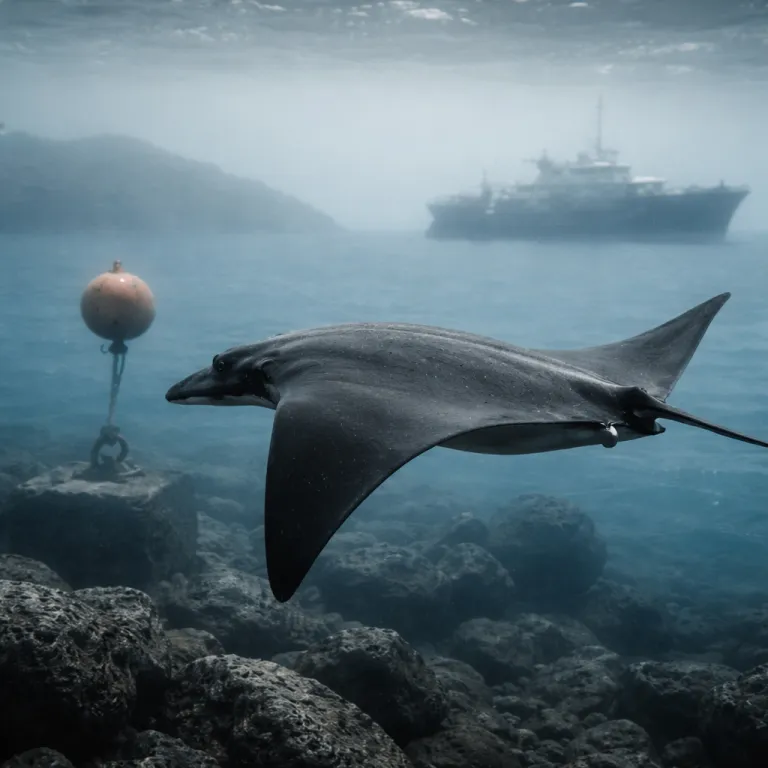
Galapagos manta ray snorkeling in newly mapped migration corridors
Professor Diana Pazmiño’s recent work on oceanic manta ray migration is reshaping how luxury travelers think about galapagos manta ray snorkeling. Her team has traced precise paths through the galapagos sea where manta rays, mobula rays and other rays galapagos move between key islands, revealing that several classic galapagos snorkeling routes overlap with these corridors. For guests planning the best snorkeling from high end bases on santa cruz or nearby islands, this means your chosen tour will now quietly signal how seriously your operator treats marine science.
The research highlights channels between santa cruz, seymour island, bartolome island and more remote parts of the galapagos islands, where the largest ray species on Earth glides through plankton rich water. These oceanic manta rays, with an average wingspan of around 4.5 meters, share feeding grounds with eagle rays, galapagos rays, sharks and sea lions, turning a single snorkeling session into a masterclass in marine species interactions. For solo explorers booking a hotel on cruz island or another populated island, the new data makes it easier to choose a tour that respects these migration paths rather than chasing the closest beach for a quick dip in the water.
Luxury focused operators now map their routes with almost cartographic precision, treating each corridor like a carefully drawn path fill on a designer chart. Think of the migration line as a stroke whose stroke width represents not only manta density but also the pressure of tourism, with every boat wake adding to a figurative stroke miterlimit that should never be exceeded. When you compare itineraries, ask where your snorkeling tour will position you relative to these corridors, and whether the operator has adjusted its stroke miterlimit and fill stroke zones to reduce overlap with peak feeding times for each ray and manta ray population.
How high end hotels are rewriting marine excursions around manta rays
On santa cruz, properties such as Pikaia Lodge and Finch Bay are quietly reengineering their marine excursion playbooks in response to the new manta corridors. Their teams work with local marine biologists and conservation groups to time each dive or snorkeling tour so that guests still enjoy the best encounters with manta rays and sharks, while boats skirt the most sensitive stretches of galapagos sea during peak feeding. If you are comparing dates, pair these efforts with guidance from an optimal periods for booking luxury hotels in the Galápagos resource so that your stay aligns with both manta seasonality and calmer water.
Oceanic manta rays differ from reef focused manta species found elsewhere, and that difference matters for route design and for every galapagos manta ray snorkeling plan. These giants roam open water between island groups, so a single cruise or day tour can intersect multiple corridors where manta rays, mobula rays and other rays congregate, especially between santa cruz and seymour island. Reef associated ray species tend to hug specific rocky outcrops or a single beach, while these oceanic travelers cross vast marine expanses that require operators to think in archipelago wide patterns rather than isolated sites.
Hotels that take this seriously now brief guests on corridor maps before any galapagos snorkeling departure, explaining why a planned dive might shift from bartolome island to a different island if manta activity spikes in a protected zone. In Puerto Ayora on santa cruz, some concierge teams even show simplified diagrams that resemble a digital path fill, where each corridor line has a clear stroke and a defined stroke width to indicate sensitivity, and where the miterlimit stroke conceptually marks the threshold beyond which guest numbers will not increase. For travelers choosing between several islands and properties, this level of transparency is often the best indicator that a hotel’s marine program will balance comfort, wildlife ethics and the long term health of manta rays and other marine species.
What responsible galapagos manta ray snorkeling means for your booking
For solo explorers using a premium booking platform to select a hotel in the galapagos islands, the new manta ray research turns a simple snorkeling add on into a test of values. Before confirming a room on santa cruz or another island, ask the property which snorkel and dive sites they use for manta rays, sharks and sea lions, and whether those sites overlap with the newly identified corridors between cruz island, seymour island and bartolome island. A serious operator will explain how the mandatory 200 dollar Galápagos National Park fee helps fund research like Professor Pazmiño’s, and how that revenue supports long term monitoring of manta rays, galapagos rays and other threatened species.
When you review marine excursion descriptions, look for clear limits on group size, time in the water and the number of daily departures to each site, rather than vague promises of the best snorkeling everywhere in the archipelago. Ethical guides will brief you on the difference between oceanic manta rays and other ray species, outline how close you should swim, and remind you that “Are manta rays dangerous to snorkelers? No, they are harmless and often curious.” They should also state that “Do I need prior snorkeling experience? Basic swimming skills are sufficient; guides provide instructions.” and “What is the best time to see manta rays? January to March offers peak sightings.” so that expectations match real galapagos snorkeling conditions.
Where you sleep shapes how you meet these animals, which is why properties such as the Angermeyer Waterfront Inn in Puerto Ayora, reviewed in depth as a refined oceanfront stay on a specialist Santa Cruz hotel guide, now highlight corridor aware tours as part of their value proposition. When you use a curated platform that positions itself as a Galápagos hotel booking site for premium stays and seamless reservations, filter options not only by room category but also by the quality of their marine briefings and their respect for manta rays. In a destination where a single stroke of a snorkeler’s fin can alter a feeding pattern, the real luxury is choosing operators whose invisible path fill on the map keeps both you and the manta ray exactly where you should be.
References
Galapagos Conservation Trust ; Galápagos National Park Directorate ; Marine Megafauna Foundation.